

In this Thailand Travel Guide we will cover everything , From Bangkok’s golden temples to hidden island beaches — everything you need to plan an unforgettable, budget-smart Thailand adventure in 2026.
Some countries grab you once and never fully let go. Thailand is one of them. Whether it’s the impossibly fragrant street food at midnight, the surreal calm of a 700-year-old temple at dawn, or the kind of turquoise water you thought only existed in screensaver photos
Thailand delivers on every expectation and then quietly exceeds them.
In 2026, it remains one of the world’s best-value travel destinations. A full day of exploring — meals, transport, sightseeing, accommodation — can comfortably cost less than a single restaurant dinner back home.
And yet the experience on offer is anything but budget in feel: rich culture, world-class food, extraordinary landscapes, and a warmth of hospitality that is genuinely hard to find elsewhere.
This Thailand Travel Guide covers everything a first-time and returning traveller needs — visas, cheap flights, best seasons, top destinations, how to get around, what to budget, and how to travel respectfully.
We’ve also linked our in-depth guides on specific topics so you can dive deeper wherever you need to.
In this Thailand Travel Guide we cover :
- Why Thailand still earns the hype in 2026
- Visas — what you need before you fly
- How to find cheap flights to Thailand
- Best time to visit: the honest breakdown
- Top destinations for every type of traveller
- Suggested 10-day itinerary
- Getting around Thailand on a budget
- Daily budget breakdown
- Food, culture, and etiquette essentials
- Health, safety, and practical tips
1. Why Thailand still earns the hype in 2026

Let’s be honest — “Land of Smiles” sounds like tourism board copy. But spend three days in Thailand and you’ll understand why the phrase stuck. The hospitality here isn’t performative.
It’s baked into daily culture, rooted in Buddhism, and expressed in a thousand small ways that accumulate into something that genuinely changes how you feel about travel.
Beyond the warmth, Thailand’s sheer range is hard to match. Within a two-week trip, you can meditate in a working jungle monastery, eat the best noodle soup of your life for $2, dive coral reefs teeming with reef sharks, and dance at a rooftop bar in one of Asia’s most electric cities. Very few countries offer that spread — and fewer still at this price point.
The country has also invested meaningfully in sustainable tourism since 2022. National parks now cap visitors, coral restoration programmes on Koh Tao are producing real results, and there’s growing effort to redirect tourist spending to rural communities.
Travel here thoughtfully and your money does genuine good. This Thailand travel guide will help you plan a complete budget-friendly trip in 2026.
Quick facts: Currency is Thai Baht (THB). Language is Thai, but English is widely spoken in tourist areas. Voltage is 220V. Bangkok has two international airports — Suvarnabhumi (BKK) for most carriers, Don Mueang (DMK) for budget airlines. Time zone is UTC+7.
2. Visa — what you need before you board
Getting your visa situation sorted is the very first step of Thailand trip planning. The good news: Thailand has one of the more accessible visa systems in Southeast Asia, with most nationalities having multiple entry options available.
Citizens of the UK, USA, EU countries, Australia, and many others can enter Thailand visa-free for up to 60 days under Thailand’s exemption scheme. Nationals from countries including India can apply for a Visa on Arrival (VOA) at major airports for up to 15 days, or obtain a Tourist Visa in advance for a 60-day stay.
Thailand also operates an e-Visa system for selected nationalities, allowing online applications before travel.
One thing that applies to everyone regardless of nationality: the Thailand Digital Arrival Card (TDAC) is now mandatory. It replaced paper immigration forms and must be completed online within 72 hours before arrival.
Skipping it causes significant delays at immigration — fill it out before you fly.
This Thailand travel guide is designed to help first-time travelers avoid common mistakes.
🛂
Read our full guide
Complete Thailand Visa Guide 2026: Visa-Free Countries, VOA, E-Visa & TDAC
Full country-by-country breakdown, required documents, VOA fees, TDAC form link, and common immigration mistakes to avoid.
Whatever your visa type, always carry these when you arrive: a confirmed return or onward flight ticket, hotel booking confirmation, and proof of sufficient funds (Thai immigration typically expects around 10,000 THB per person). Officials at Bangkok’s Suvarnabhumi do check these — being prepared saves hassle at the counter.
2. How to find cheap flights to Thailand in 2026
Airfare is usually the single biggest expense of a Thailand trip — but it’s also the most controllable cost if you plan ahead. Bangkok’s Suvarnabhumi (BKK) is the main international hub, while Don Mueang (DMK) handles most budget airline routes. Phuket (HKT) and Chiang Mai (CNX) also receive direct international flights from several regions.
The general rule: book 60–90 days in advance for the best fares. December through February is peak season — prices spike significantly and availability tightens. Travelling in March–May or September–October typically yields 30–50% cheaper tickets with fewer crowds. Mid-week flights (Tuesday to Thursday) are consistently cheaper than weekend departures.
Money-Saving Tip
Flying into Bangkok but heading to Chiang Mai or Phuket? Book your domestic leg separately on AirAsia or Nok Air. One-way domestic flights inside Thailand often cost $15–$35 when booked a few weeks ahead — far cheaper than re-routing your international ticket.
✈️
Read our full guide
Best Cheap Flights to Thailand 2026: Smart Hacks to Save Money & Book Smart
Best airlines, booking windows, flexible date tools, the Kiwi.com Nomad multi-city hack, and how to combine budget carriers to save up to 40%.
3. Best time to visit Thailand in 2026
Thailand has three distinct seasons, and picking the right one for your travel style matters more than most people realise. The country is also large enough that the north, central plains, Andaman coast, and Gulf coast all follow slightly different weather patterns.
Cool & Dry: Nov – Feb
Hot Season: Mar – May
Monsoon: Jun – Oct
November to February — the classic peak season
This is Thailand at its most comfortable and most visited. The north runs a pleasant 18–26°C, both the Andaman and Gulf coasts are calm and clear, and the scenery is lush without being waterlogged. Expect higher accommodation prices (book 3–4 weeks ahead for islands), larger crowds at major temples, and consistently excellent weather across the country.
March to May — hot, affordable, and lively
Temperatures climb past 38–40°C in Bangkok and the central plains. It’s intense — but tourist numbers and prices drop sharply, often 25–40% cheaper than peak season. The highlight of this window is Songkran, Thailand’s New Year water festival running 13–15 April. Chiang Mai’s Songkran is particularly celebrated, transforming the entire old city into a multi-day water fight of extraordinary joy. If the heat doesn’t deter you, this season rewards you well.
June to October — monsoon, properly understood
The rainy season is widely misunderstood. It doesn’t rain all day — you typically get one heavy tropical downpour in the late afternoon, then a spectacular sky. Northern Thailand and the interior stay largely accessible. The Andaman coast (Phuket, Krabi, Koh Lanta) gets rough seas — those islands are best avoided — but the Gulf coast (Koh Samui, Koh Phangan) runs on a different weather cycle and is often perfectly fine through September. Prices are lowest, crowds smallest.
Choosing when to visit is the most important decision — read our complete Thailand weather and seasons guide before booking anything.
The sweet spot most guides miss but Don’t worry we will cover in Thailand Travel Guide : Early November is arguably the single best week of the Thai calendar for budget travellers. The rains have ended, the landscape is at its greenest, peak-season pricing hasn’t hit yet, and the beaches are wide and uncrowded. If your dates are flexible, aim here.
Looking for affordable stays? Check our complete guide to best budget hotels in Thailand
5. Top destinations for every type of traveller
Thailand’s genius is its range. The same country that has the world’s best beach parties also has silent forest monasteries and ancient kingdoms. Here are the destinations worth building your 2026 itinerary around according to our Thailand Travel Guide.
🏙 Bangkok
Grand Palace, Chatuchak market, Chinatown at night, rooftop bars. Allow 3–4 days minimum.
🌿 Chiang Mai
Temple-hopping, night bazaars, ethical elephant sanctuaries, and the best khao soi in the country.
🏖 Krabi
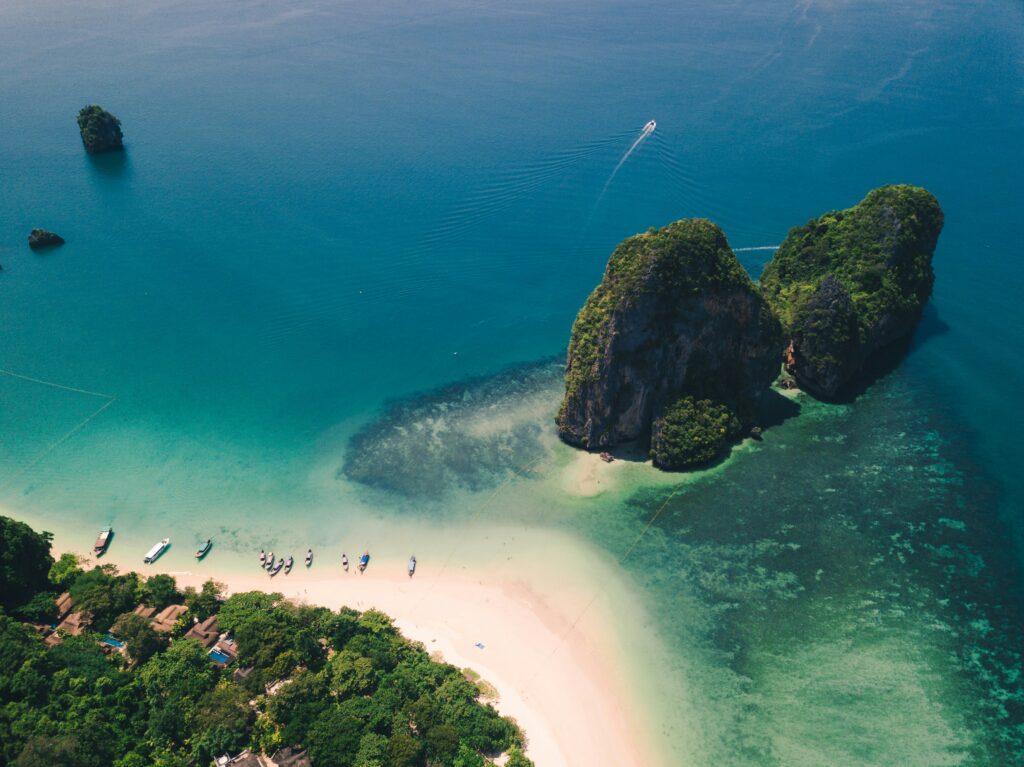
Towering limestone karsts, turquoise lagoons, and the jumping-off point for Railay Beach.
🏝 Koh Lanta
Long quiet beaches, good snorkelling, relaxed pace. A mellower Andaman alternative to Phi Phi.
🤿 Koh Tao
The world’s most affordable scuba certification island. Crystal clear water, competitive dive schools.
⛩ Chiang Rai
The White Temple, Blue Temple, cooler climate, and the mystical Golden Triangle border area.
🏔 Pai
A bohemian mountain town 3 hours from Chiang Mai. Waterfalls, hot springs, misty morning valleys.
🏛 Sukhothai
Thailand’s ancient first capital. Rent a bicycle and glide through 700-year-old temple ruins at dawn.
The 2026 rising destination: Nan Province
Nan sits in the mountainous northeast of Northern Thailand near the Laos border. It has exceptional Buddhist temple murals, Mien and Hmong hill tribe villages, and trekking routes that rival anything in Chiang Mai — at a fraction of the tourist footprint. A handful of boutique guesthouses have opened in the past two years, but Nan remains genuinely undiscovered. This is the one to visit before the tour buses arrive.
6. Suggested 10-day itinerary for first-time visitors
This route balances culture, nature, and beach time without burning through your budget on domestic transport. It starts and ends in Bangkok, with a northern loop and a southern island finish.
Days 1–3
Bangkok — temples, markets, and street food
Grand Palace, Wat Pho, Chatuchak weekend market, Yaowarat (Chinatown) at night. Use the BTS Skytrain and river ferries to get around cheaply.
Days 4–6
Chiang Mai — culture and the north
Fly or take the overnight train. Visit Doi Suthep temple, explore the Sunday Walking Street, do a half-day at an ethical elephant sanctuary. Day trip to Pai optional.
Days 7–10
Koh Samui or Koh Tao — islands and ocean
Fly back to Bangkok then down to Koh Samui, or take a bus-ferry combo. Snorkel, dive, or simply decompress on a beach that earns it.
Budget Tip
The overnight train from Bangkok to Chiang Mai (departs ~6pm, arrives ~7am) doubles as your accommodation for that night — you save a hotel night and wake up in a new city. A second-class sleeper berth costs around $12–$18 USD. Book through the State Railways of Thailand website.
Not sure how to plan your days?
Follow our detailed 👉 Perfect Thailand Itinerary 7 Days or 10 Days for a complete travel plan.
7. Getting around Thailand on a budget

Domestic flights:
AirAsia, Nok Air, and Thai Lion Air connect Bangkok to Chiang Mai, Phuket, Krabi, and Koh Samui for $15–$50 booked in advance. Don Mueang (DMK) is Bangkok’s low-cost terminal.
Overnight trains:
Atmospheric, affordable, and you save on a night’s accommodation. Bangkok to Chiang Mai is the classic route. Second-class sleepers are perfectly comfortable.
VIP buses:
Air-conditioned with reclining seats. Bangkok to Chiang Mai by night bus costs around $7–$12. Reliable and widely used by travellers.
Grab:
Southeast Asia’s ride-hailing app, working in Bangkok, Chiang Mai, Phuket, and most cities. Transparent pricing, no negotiation needed.
Songthaews:
Shared pickup trucks operating fixed local routes — the local bus equivalent in northern Thailand. Around $0.50–$1 per ride.
Ferries to islands:
Regular and affordable, but subject to cancellation in rough weather during monsoon season. Build buffer days near any island departure on your return home.
Scooter hire:
$8–$15/day in most towns. Requires a valid driving licence; international licence recommended. Popular and practical for exploring at your own pace — take it seriously and wear a helmet.
8. Daily budget breakdown — what things actually cost
Thailand is one of the world’s best value travel destinations. Here’s a realistic daily spend across three budget levels, in USD for easy global reference.
Budget traveller
Accommodation (per night) $8 – $18
Food & drinks (per day) $5 – $9
Local transport $2 – $5
Activities & entry fees $3 – $8
Estimated daily total $18 – $40
Mid-range
Accommodation (per night) $30 – $65
Food & drinks (per day) $15 – $30
Local transport $6 – $15
Activities & entry fees $10 – $25
Estimated daily total $61 – $135
Comfortable
Accommodation (per night) $90 – $250+
Food & drinks (per day) $40 – $90
Local transport $15 – $40
Activities & entry fees $30 – $120
Estimated daily total $175 – $500+
Street food is the budget traveller’s greatest ally here. Pad thai from a cart: $1.50–$2. A full rice and curry plate at a local canteen: $2. Fresh mango with sticky rice: $1.50. Eat where the plastic stools are out and the menus have no English — that’s the tell for good, honest food — and you’ll spend under $10 a day on meals and eat extraordinarily well.
9. Food, culture, and etiquette
Dishes worth crossing continents for
Khao soi — a northern coconut curry noodle soup — is the dish most travellers say they miss most when they leave. Find it in Chiang Mai at wooden shopfronts along Charoen Rat Road. Tom kha gai (coconut galangal chicken soup), pad see ew (broad rice noodles stir-fried with egg), som tum (green papaya salad, often very spicy), and mango sticky rice complete the essential list. Bangkok’s Chinatown (Yaowarat) at night is a separate unmissable experience — seafood and dim sum at prices that seem impossible for food this good.
Temple etiquette — the non-negotiables
Thailand’s temples are active places of Buddhist worship, not just photo backgrounds. Cover your shoulders and knees before entering any wat — carry a light scarf in your bag for this. Remove shoes before stepping inside buildings. Don’t point your feet at Buddha images or monks — feet are considered spiritually low. Women should place items near a monk rather than handing directly. Photography is usually permitted in grounds but often restricted inside prayer halls — follow posted signs.
The Thai smile and the wai: The traditional greeting — palms pressed together, slight bow — is Thailand’s version of a handshake. Return it when someone greets you this way. Learn to say “sawasdee” (hello) and “khob khun” (thank you) — even a clumsy attempt earns a genuinely warm response. Respect given is always returned here.
10. Health, safety, and practical essentials
Travel insurance:
Non-negotiable. Bangkok’s private hospitals are excellent but expensive without coverage. Get a policy that covers medical evacuation as well as standard treatment. Compare plans here before you fly.
Water:
Tap water is not safe to drink. Bottled water costs $0.30–$0.60/litre everywhere. Many guesthouses provide filtered water refills for free — ask when you check in.
Mosquitoes:
Dengue fever is present in Thailand, particularly during and after the rainy season. Use a DEET-based repellent, especially at dawn and dusk. Malaria risk is low in tourist regions but higher near some land borders.
Sun:
The tropical sun is stronger than it looks, even on overcast days. SPF 50 sunscreen, a hat, and staying in shade between 11am–3pm will protect you more than you think you need.
Local SIM card:
Buy at the airport on arrival — AIS and DTAC both offer tourist SIM plans with generous data for $8–$15 for 15–30 days. Vastly cheaper than international roaming.
Also you can take eSim before arrival : check Esim here.
ATMs and money:
Thai ATMs charge a fixed fee (~180–220 THB) per foreign withdrawal. Withdraw larger amounts less frequently to minimise fees. Airport exchange counters offer worse rates than in-city exchange booths — don’t change too much on arrival.
Common scams:
The most frequent ones involve tuk-tuk drivers claiming a temple is “closed today” and offering to take you somewhere else, overpriced gem shops, and pushy tailors near tourist areas. Walk away calmly and politely — confrontation is rare and unnecessary.
Plan smart, travel well
This Thailand travel guide is designed to help first-time travelers avoid common mistakes. Thailand in 2026 rewards the traveller who prepares properly and then lets go of the plan when something better appears on the road. Sort your visa, book your flight early, pack light, and arrive hungry — the rest tends to take care of itself.
We hope this Thailand travel guide helps you plan an unforgettable trip.
Use the guides below to nail down the two most important logistics before your trip departs:
👉 Complete Thailand Visa Guide 2026 — visa-free countries, VOA, e-visa & TDAC →
👉 Best Cheap Flights to Thailand 2026 — how to book smart and save big →
ไปเที่ยวให้สนุก — have a brilliant trip.
Pingback: Best Cheap Flights to Thailand 2026: Save Money & Book Smart
Pingback: Best Budget Hotels in Thailand 2026
Pingback: Perfect Thailand Itinerary 7 Days or 10 Days
Pingback: Thailand Visa Guide 2026: Visa-Free Countries, VOA, E-Visa & TDAC